Starlink
Satellite access with a terminal at your property. Worth considering where existing options are poor and a practical clear-sky installation is possible. Confirm the service, hardware and actual delivered experience.
STARLINK / WEIGHING YOUR OPTIONS
Starlink can open up a useful new option where the usual choices fall short. Compare what is actually available at your address—and choose around the calls, work and evenings you want back.
Independent Seekstead guide · Australia
Provider facts checked 23 September 2026
COMPARE THE RIGHT THINGS
Satellite access with a terminal at your property. Worth considering where existing options are poor and a practical clear-sky installation is possible. Confirm the service, hardware and actual delivered experience.
The technology and retail plan matter. If a good fixed-line service already supports your household at a sensible price, changing to satellite may add equipment and installation without solving a real problem.
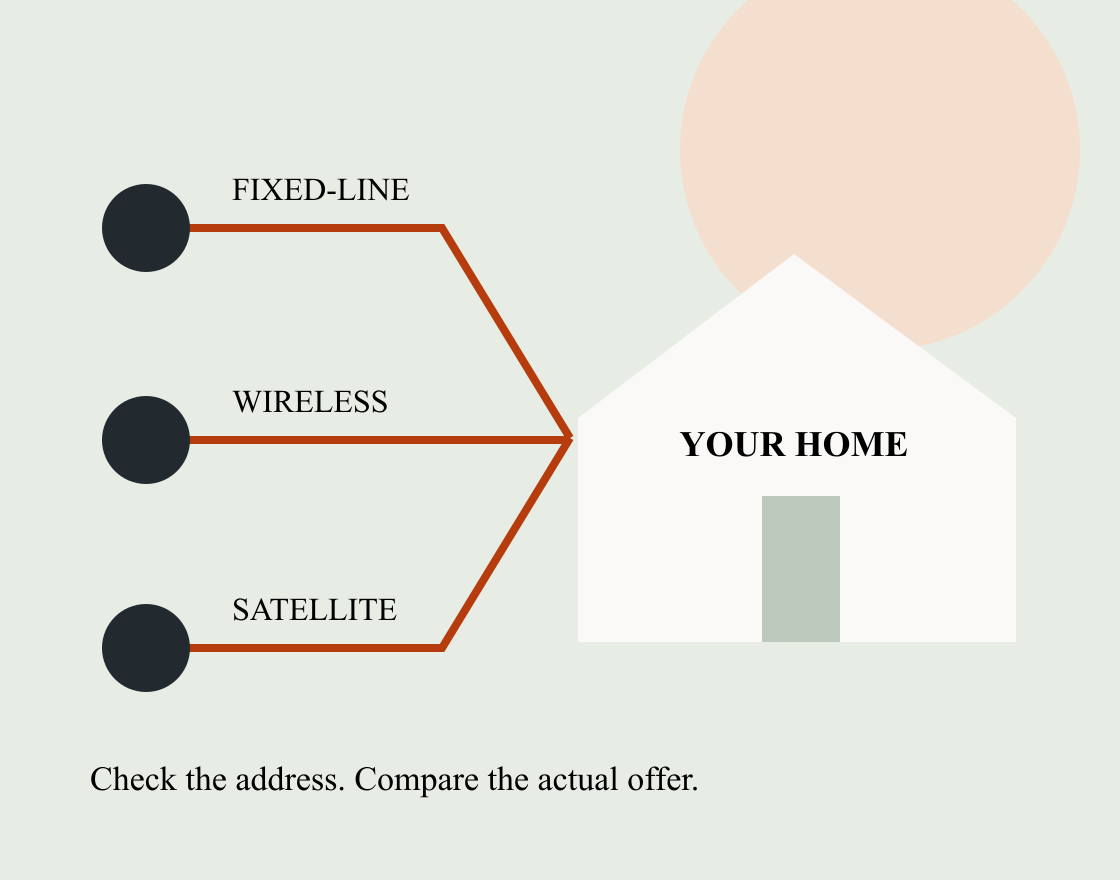
A terrestrial tower connects to an outdoor antenna and indoor connection box. It is not Sky Muster satellite and not simply a mobile SIM. Check eligibility and current retailer offers rather than assuming older performance reports describe today’s service.
A separate satellite service with an installed dish and modem, sold through providers. Compare its current plan and application suitability with Starlink; do not group it with Fixed Wireless.
May be a practical option where signal, indoor coverage, plan terms and capacity suit the household. Check the actual router location and busy-period performance; a coverage map alone does not prove the experience.
START WITH THE FRUSTRATION
Check latency, interruptions and upload behaviour—not just a headline download number. Test the applications you use.
Consider simultaneous devices, video, downloads and busy evenings. Data allowance and speed are different limits.
Compare the whole first year: equipment, installation, recurring service, delivery, extras and any exit costs. An advertised monthly price is only part of it.
These are comparison questions, not a claim that one technology always wins. The best available plan at one address can be the wrong reference for another.
MAKE A SHORTLIST
EXPLORE STARLINK
If useful fixed-line or mobile service is unavailable or consistently fails your needs, and a safe clear-sky setup is practical, Starlink is worth evaluating. Include equipment and service cost in that decision.
KEEP WHAT WORKS
If your current service handles the household’s needs, first check whether a Wi-Fi improvement or a better retail plan solves the remaining issue. A new outdoor terminal is not a cure for every slow bedroom connection.
BEFORE YOU SWITCH
Use nbn’s address information and current retail providers, mobile coverage checks and Starlink’s own availability/order process. Record what can actually be supplied.
List all setup and recurring charges, data limits and contract conditions. Do not subtract a referral benefit until your eligibility and actual offer are confirmed.
For Starlink, assess sky, power and mounting. nbn Fixed Wireless and Sky Muster have their own approved installation processes. They are not interchangeable DIY jobs.
Where practical, prove the new service with your devices and normal workload before cancelling the old one. Check cancellation, number/phone dependencies and current return terms separately.
No. We have not measured your property or run a controlled comparison of these services. Provider headline speeds, technology labels and another household’s experience cannot establish your result. Use them to form a shortlist, then verify the service you will actually receive.
YOUR NEXT USEFUL STEP
See how the kit, setup and service fit together in our Starlink overview. Ready buyers can continue directly to Starlink through the approved referral link.
Referral link: Seekstead may receive a benefit if you qualify. Starlink determines eligibility and your final offer. Opens the provider’s site in a new tab; it is not a pre-filled order. How our referrals work.
KEEP EXPLORING
Provider facts were checked on 23 September 2026. Prices, plans, permissions and terms can change; confirm the exact offer and requirements with the provider before ordering or travelling. This guide is a research-based explanation, not a field-test result or an individual installation assessment.